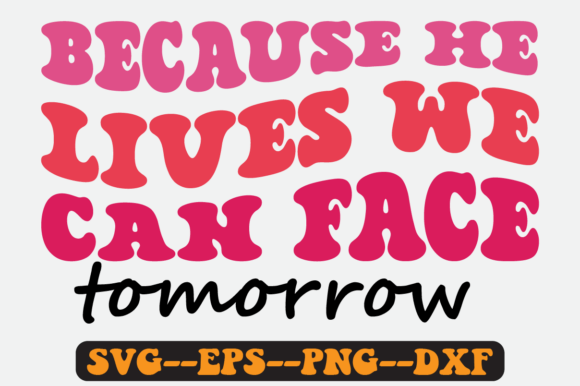
Because He Lives We Can Face Tomorrow
As someone who’s stitched thousands of designs across apparel, home goods, and personalized gifts—everything from boutique baby onesies to holiday-themed tote bags—I opened Because He Lives We Can Face Tomorrow expecting warmth, clarity, and quiet strength. What I found was a design that lands exactly where it should: grounded in sincerity, built for real-world stitching, and thoughtful enough to earn its place on a handmade product customers actually keep.
A Design That Breathes With the Fabric
First impression? It feels like a gentle pause—not flashy, not fussy. The retro-inspired lettering has soft curves and open spacing, avoiding tight kerning or fragile serifs that fray under satin stitch. There’s no heavy shadowing, no excessive embellishment, no overlapping elements that would demand multiple hooping passes. That’s huge. When you’re prepping a custom embroidered sweatshirt for a church fundraiser or stitching a keepsake pillow cover for a new mom, simplicity isn’t a compromise—it’s reliability.
I tested Because He Lives We Can Face Tomorrow as a 4.5” wide chest placement on a midweight cotton-blend hoodie. The layout held up beautifully: balanced line breaks, consistent stroke weight, and just enough visual rhythm to guide the eye without demanding attention. It didn’t shout. It settled in—like something meant to be lived with, not scrolled past.
Where This Design Earns Its Keep
This isn’t a one-size-fits-all graphic. It thrives where meaning matters more than movement: nursery decor, baptismal blankets, women’s ministry aprons, chaplaincy patches, grief support tote bags, and wedding guest favors. I used it on a linen tea towel for a small shop launch—and customers commented twice: once on the message, once on how “clean” the stitching looked. That’s the sweet spot.
- Custom apparel: Works cleanly on crewnecks, relaxed-fit tees, and unisex sweatshirts—especially when paired with tonal thread (navy on navy, charcoal on heather grey).
- Baby embroidery: Gentle scale and open letterforms translate well to onesies and burp cloths—no tiny hooks or sharp corners to snag delicate skin.
- Patches & applique: Clean outlines make it ideal for iron-on or sewn-on patches. No dense fill areas that stiffen fabric.
- Holiday & gift embroidery: Fits naturally on Christmas stockings, Easter pillow covers, or Mother’s Day kitchen towels—timeless enough to avoid seasonal whiplash.
- Etsy & small shop listings: As a digital embroidery file, it pairs well with minimalist mockups. Customers recognize the sentiment instantly—no explanation needed.
Where to Pause Before Pressing Start
Not every surface welcomes this design equally. Here’s where I’d slow down:
- Small hoop sizes (under 4”): The full phrase may need scaling—check line spacing at reduced size. Tight compression can blur readability.
- Textured or napped fabrics: Fleece, terry cloth, or bouclé can swallow fine details. Add a tear-away + cut-away stabilizer combo and reduce stitch density slightly if your machine allows.
- Stretchy knits: Pre-stabilize thoroughly. Running stitch outlines help anchor the design before fill stitches lock in.
- Dark or heavily dyed fabrics: Test thread contrast first. A light grey or oatmeal thread often reads warmer and clearer than stark white on black.
- Caps & curved surfaces: The horizontal flow works best on flat or gently contoured areas. Avoid crowns or deep front curves unless you’re using a cap frame and have verified stitch alignment.
What It Adds to Your Finished Product—Beyond the Thread
Stitching Because He Lives We Can Face Tomorrow doesn’t just add text—it adds intention. That shows up in customer trust: buyers sense the care behind a legible, well-spaced, thoughtfully sized embroidery file. It elevates a plain tote bag into a meaningful companion. It turns a generic sweatshirt into something quietly personal—without needing a monogram or photo.
For craft businesses and Etsy sellers, this design strengthens brand consistency when used across a collection: think matching tea towels and baby blankets in a “Grace Notes” line. For commercial embroidery shops, it’s low-risk—fewer re-runs, fewer complaints about unreadable lettering, less time troubleshooting density or pull-through.
Practical Designer Notes You’ll Actually Use
Before stitching your first Because He Lives We Can Face Tomorrow piece:
- Run a test on scrap fabric—same weight and weave as your final product.
- Check thread color contrast on both light and dark backgrounds using a simple printable mockup.
- Review stitch density: if the file includes fill areas (not just outlines), ensure they’re breathable—not so dense they’ll crack after washing.
- Confirm hoop size compatibility. If you’re working with a 5×7 hoop, verify the design fits comfortably within those bounds—including margin for stabilization.
- Inspect small details at 200% zoom: are terminals clean? Do letters stand independently without shared stems?
- Use proper stabilizer—especially for lightweight cottons or textured weaves. A medium-weight cut-away prevents puckering over time.
- Verify licensing terms before selling finished items or bundling this as part of a larger digital embroidery file pack.
Remember: Because He Lives We Can Face Tomorrow isn’t just a Crafts category graphic or a Graphics download. It’s a quiet promise stitched into fabric—and that only lands when the execution honors the message. Done right, it becomes part of someone’s everyday courage. That’s not just good design. That’s why we choose this work.